Geofencing attendance is one of the simplest ways to improve punctuality without adding more manager follow-up. Instead of trusting a manual message or a loosely timed clock-in, the system checks whether someone actually reached the worksite boundary.
When teams know attendance is tied to the real location, late arrivals become easier to spot, off-site check-ins become harder to fake, and payroll records become easier to defend.
What geofencing attendance actually does
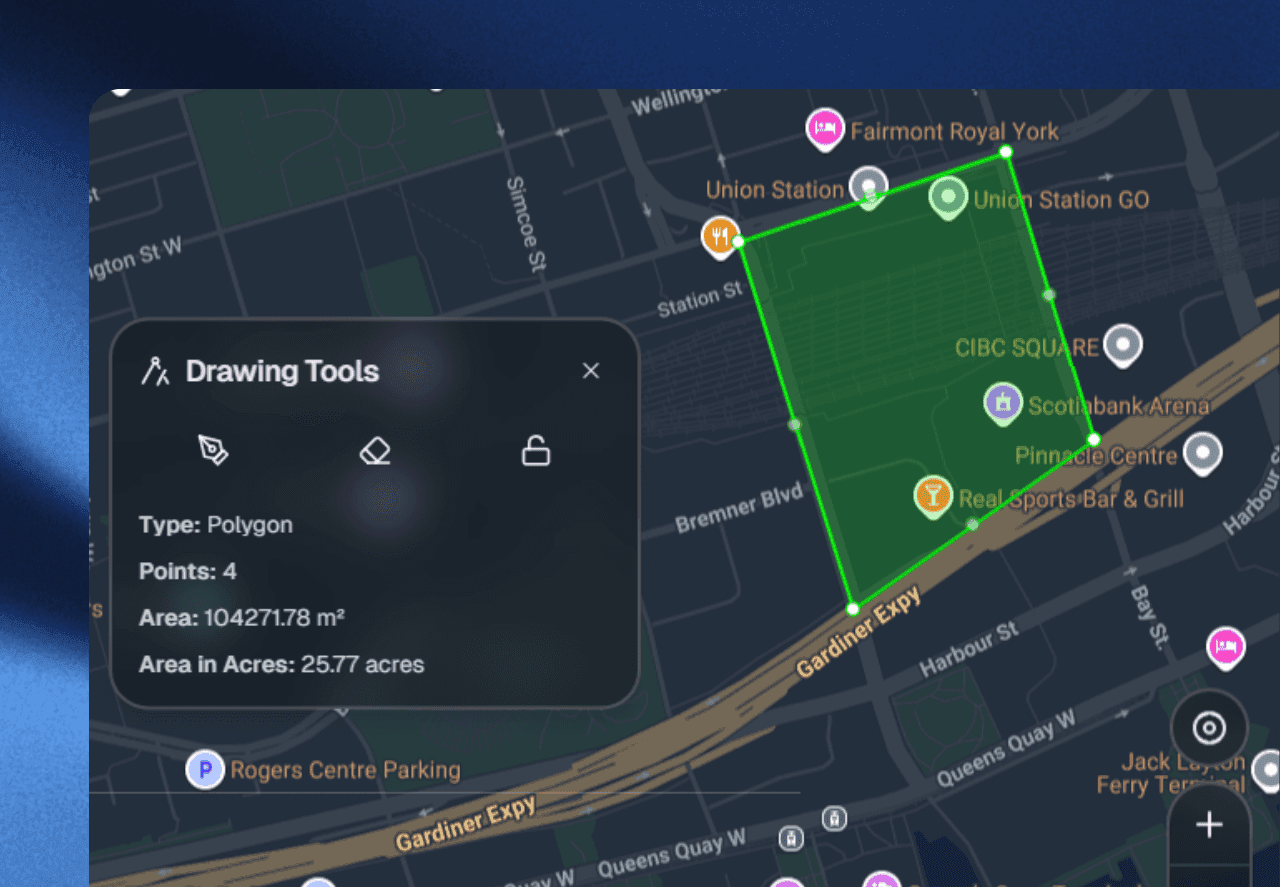
A geofencing attendance system draws a digital boundary around a site, office, warehouse, or job location. When an employee enters that zone, the platform can log the event, trigger a check-in, or require a second proof step before the shift begins.
That matters because punctuality problems are often location problems in disguise. A person can say they started on time, but operations teams still need to know whether they were really there.
Can geofencing improve employee punctuality?
Yes, especially for field teams, distributed crews, and multi-site operations. Geofencing improves punctuality by making arrival measurable. Managers can see who reached the correct site, when they entered, and whether the event matched the scheduled shift.
- Late arrivals become visible immediately instead of after payroll.
- Early arrivals and dwell time can be measured more accurately.
- Off-site or remote check-ins are much easier to challenge.
- Repeated patterns can be coached with real evidence.
Where geofencing attendance works best
Geofencing tends to work best when a team has a clear physical place where work starts. Construction sites, cleaning operations, security routes, warehouse teams, delivery hubs, field services, and on-site hospitality crews are all strong fits.
It is also useful for hybrid operations where managers need better proof of site presence before approving time, mileage, or task completion.
What geofencing does not solve by itself
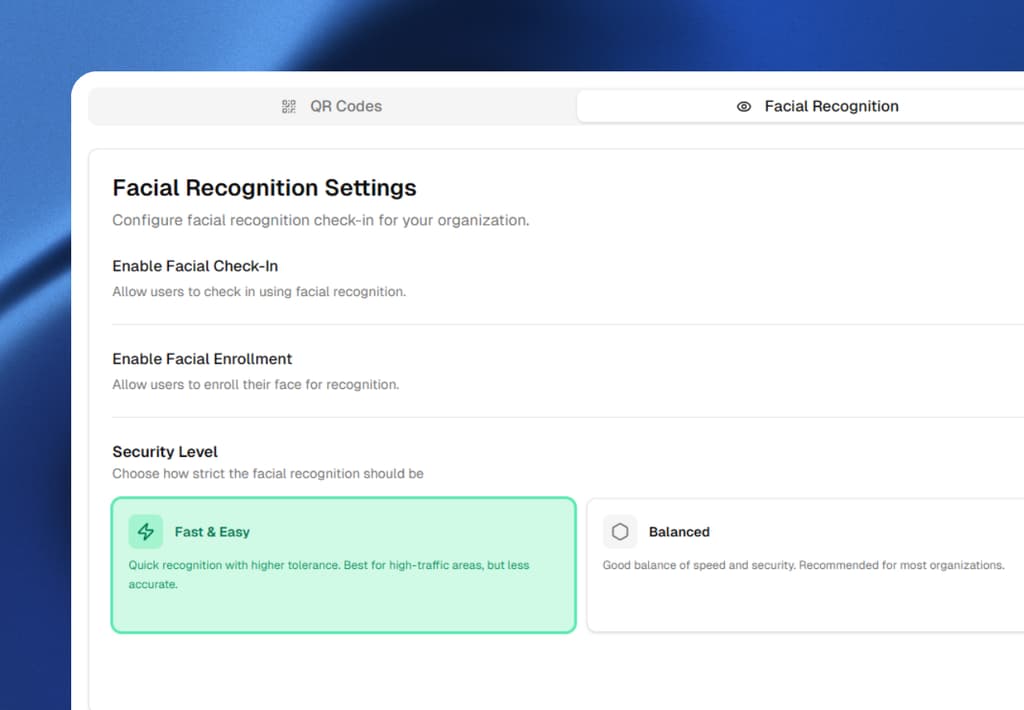
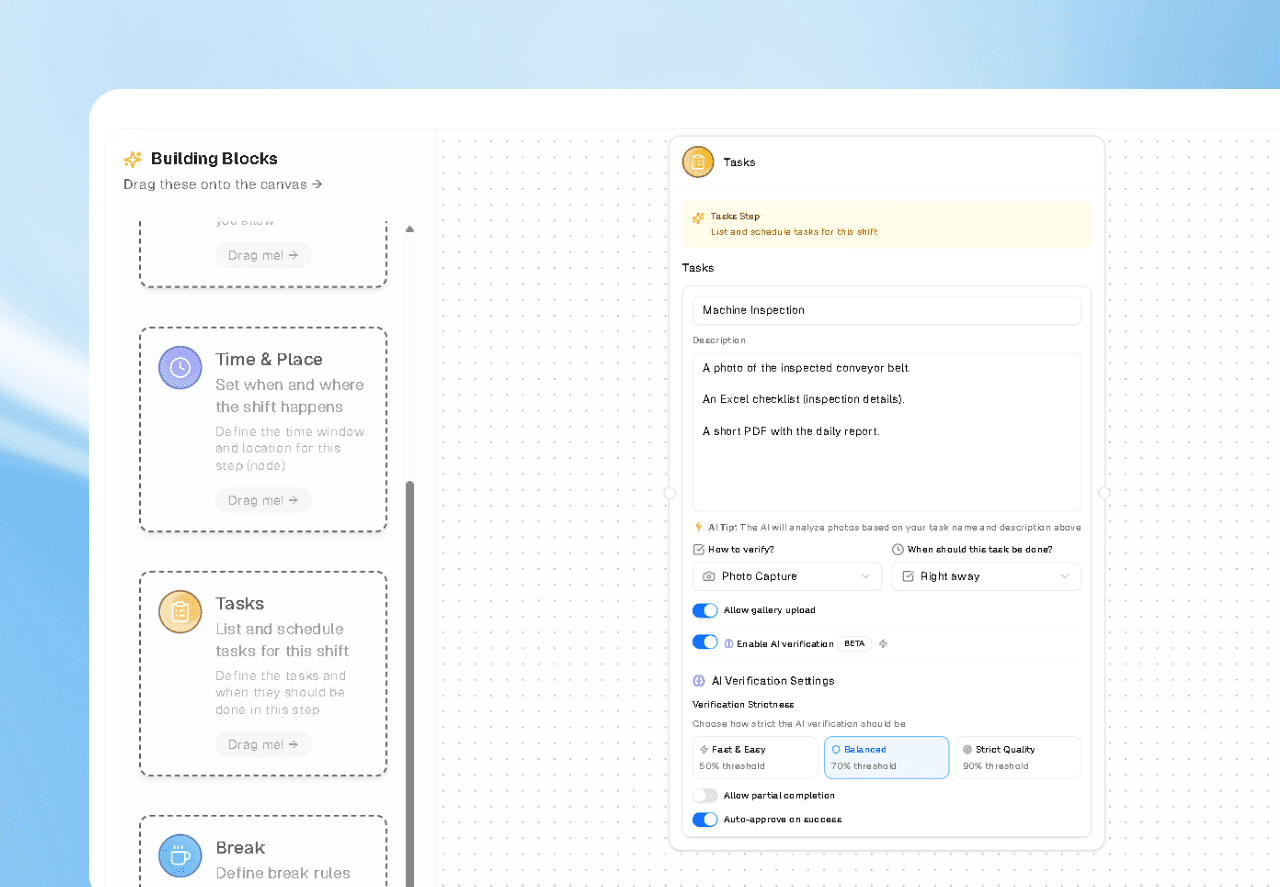
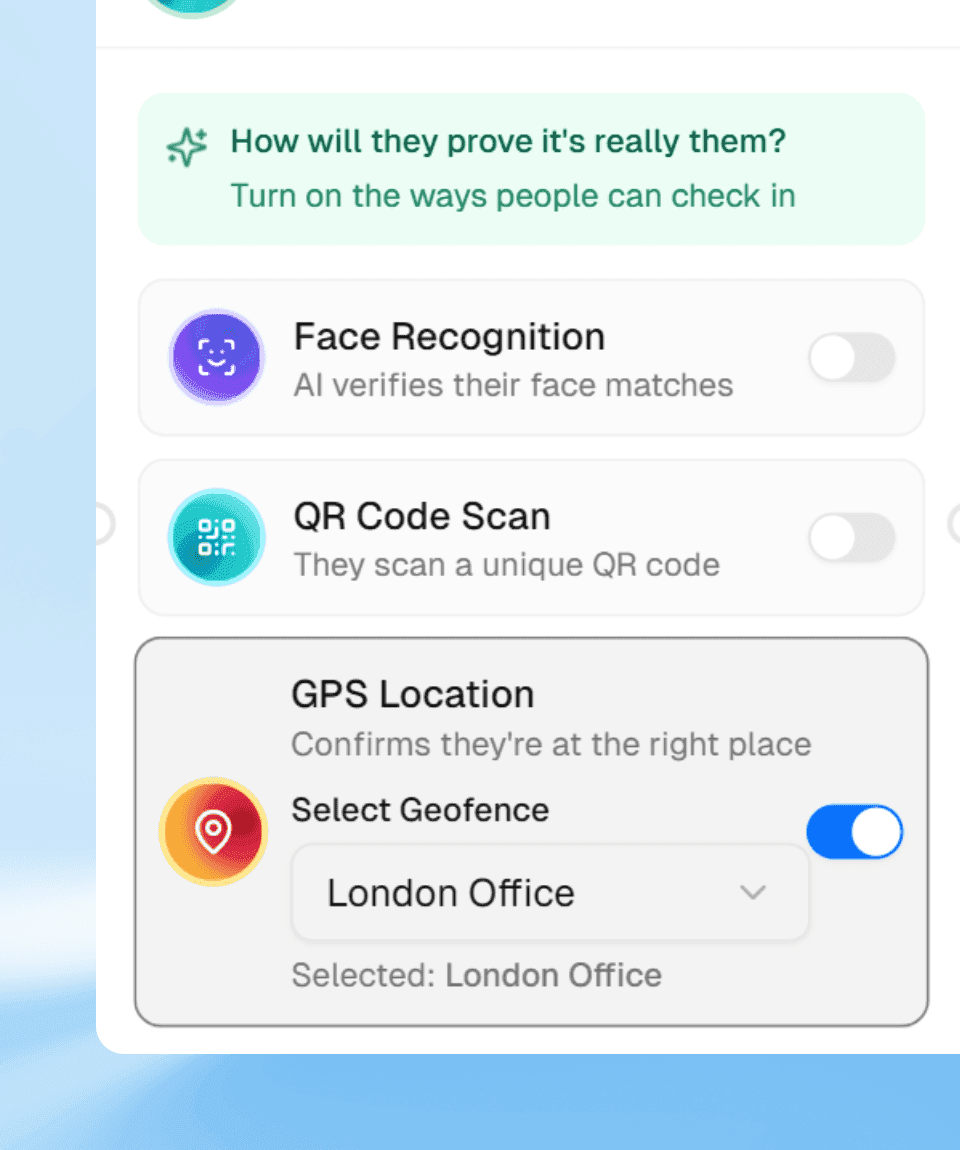
Geofencing answers "Was the person at the site?" It does not always answer "Was the right person there?" or "Did the work actually get done?" That is why high-trust operations usually combine geofencing with another proof layer.
- Use QR codes when teams scan at a shared checkpoint.
- Use facial recognition when identity proof matters most.
- Use AI task validation when the job needs photo or file evidence.
How to make it useful in real operations
The best geofencing attendance rollouts are not just about drawing a circle on a map. They define what counts as arrival, whether buffer zones are allowed, what happens if GPS is weak, and whether a second verification step is required before the shift is approved.
When that logic is clear, geofencing stops being a tracking gimmick and becomes a genuine punctuality and compliance tool.
The real gain is cleaner operational proof
Better punctuality is part of the return. The bigger win is cleaner proof for attendance, payroll, compliance, and dispute resolution. You know when someone arrived, where they arrived, and how that event connects to the work that followed.
That is what turns geofencing attendance from a nice feature into an operational control system.